

By M.G. Miller and S. Fletcher
This is a reprint of the second edition (1993) of a long out of print RCHS publication (first published 1984). It has been reprinted by the Melton & Oakham Waterways Society, with our permission, and we have agreed to make it available through the online shop.
Apart from a change of cover and the addition of some pages at the front and back to give an update on the current state of the Navigation, the original text has been retained unaltered (apart from minor alterations to the layout), albeit completely reset.
Here is the review of the original 1984 publication from our Journal of November 1985:
THE MELTON MOWBRAY NAVIGATION, M. G. Miller and S. Fletcher, 48 pp., 15 photo illustrations, location map and strip maps, soft covers. Railway and Canal Historical Society, ISBN 0-901461-37-7, £2.40 + 50p p&p.
This is a publication that is well worth reading. Not only does it give a concise history of the Navigation from 1781 when the proposal for it was first put forward through to 1791 when it received the Royal Assent, and finally on to 1 August 1877 when the Melton Mowbray Navigation (Abandonment) Act was passed; it also includes a section concerning the Navigation as it is today. In this towpath guide the authors have split the Navigation into sections of about one to two miles in length. Each of these detail the many sights and features of interest still to be seen. In addition the guide, in an effort to assist the walker to trace the line of the Navigation, contains a series of strip maps, which, together with the Ordnance Survey map references given in the text gives accurate directions as to how to locate any particular aspect or feature desired. The historical section of the book is well referenced with numerous facts and figures for those interested in such things. Your reviewer found that reading the history of the Navigation was not as mind-boggling as some canal histories in which the reader becomes so involved with the what's, who's, why's and wherefore's that some lighter points of the canal history tend to get overlooked. It could be criticised for its concise straightforward approach to the history of the Navigation, but bearing in mind the lack of proper documented evidence, much of the content having been culled from contemporary local newspapers, it is an excellent work.
STEVE KIRKHAM
-
 Discovering the Melton Navigation In the 1800s, the 16-mile Melton Navigation linked England’s national canal network with the heart of Melton Mowbray. The coming of the railways led to the Navigation’s decline and eventual closure. Today, the Melton & Oakham Waterways Society is working to restore the Navigation. The 6 easy walks in this book trace the route of the Navigation along the Rivers Eye and Wreake, from Melton Mowbray to the Grand Union Canal near Syston. There’s full detail of how to get to and from the walks, whether by car or bus, as well as interesting facts about the villages along the way.
-
Out of stock
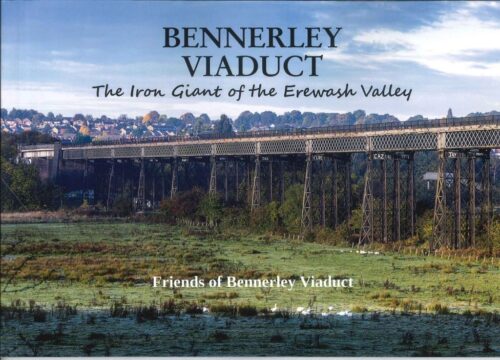 by Jeff Wynch NOW OUT OF PRINT - New (3rd) Edition in preparation and expected during 2026. [Please note that this publication is offered here to help The Friends of Bennerley Viaduct and the RCHS has had no role in its production. The price of £13.95 includes UK postage, and orders will be forwarded to FoBV for dispatch] The Bennerley Viaduct, now restored, repaired and repurposed as a walking and cycling route, opened to the public in January 2022. Since then its fame has spread far and wide and thousands of visitors have been attracted to the Grade II* listed structure. To celebrate reaching this major milestone the FoBV have just published the first ever book about the viaduct. The printing of Bennerley Viaduct – the Iron Giant of the Erewash Valley was paid for by the National Lottery Heritage Fund as part of the Bridging the Gap project which started in March 2022. The story opens in the early 1870s when the proposal for a new west to east railway line crossing the Erewash Valley was made, and tells the story of the people who built it, with a particular focus on the design and construction of the viaduct itself. The Iron Giant’s ninety year working life was fairly uneventful apart from its close encounter with a Zeppelin bombing raid in 1916. Things took a dramatic turn in the 1960s when the line was closed and the viaduct was threatened with demolition, only to be saved by some dedicated conservationists. Decades of neglect followed during which hopes of restoring the viaduct rose and fell. It was only about eight years ago that there was any realistic prospect of a restoration project. Even then it has been a roller coaster ride since 2015 when the Friends of Bennerley Viaduct was formed. The book ends on a high note with the 2022 opening ceremony and the tantalising prospect of more exciting developments to come. The book was officially launched at the Erewash Museum on 30 September. Jeff Wynch, lead author, explained how the book came about: “When we made our bid to the National Lottery Heritage Fund (NLHF) for the Bridging the Gap project we rashly included the idea of a book. We thought it would be a fitting celebration of the viaduct’s unique heritage status and of the people who built, saved and preserved it. Our Lottery bid was successful and of course then the book had to be written! Thankfully there was help on hand from several knowledgeable people who provided information for the text and many others who allowed us to use photographs and other illustrations. Special words of thanks are due to Peter Cave for his excellent design and to Moorleys Print and Publishing for the great job they did for us. The Friends are especially grateful to the NLHF for financing the production of the book.” The book, priced £10 is on sale from the Friends of Bennerley Viaduct at their offices in Castledine House, Heanor Road, Ilkeston, from forthcoming FoBV meetings and events and at a pre-Christmas stall on Ilkeston Market place, or ordered here at £13.95 including UK postage. Meetings, activities and events are always advertised on the FoBV website, Facebook page and in the newsletter which can be subscribed to free of charge. Another way to get hold of a copy of the book is to email the Friends.
-
Sale!
 by BRIAN LEWIS Softback – ISBN 978 0 901461 17 9 h = 230mm, w = 175mm, 112pp 32 photographs, 26 line drawings, 3 maps
-
Sale!
 by WENDY FREER and GILL FOSTER Softback – ISBN 978 0 901461 53 7 h = 230mm, w = 171mm, 72pp 37 photographs, 7 line drawings or maps
-
Sale!

Edited by Alan A. Jackson
56 photographs, 5 maps and line drawings Softback — ISBN 978 0 901461 16 2 h = 230mm, w = 175mm, 160pp Published as a tribute to a truly remarkable and memorable character in the field of railway history. Harold Borley (1895–1989), Londoner and London-based railwayman, devoted his spare time over many years to researching and recording the history of the railways of London and its environs. His particular passion was to establish as accurately as possible significant dates for all major events and infrastructure changes within the area of his interest from the 1830s to modern times; a valuable endeavour which culminated in the publication, seven years before his death, of his classic Chronology of London Railways. The editor has gathered together some introductory comments on the man and his career; a transcript of an interview with him at age 87, in which he vividly recalls his early adult life and railway memories, together with his personal notes supporting this interview. The major element is a collection of most of his published work outside his books. Illustrations have been specially selected to portray the railway scenes with which he was most familiar. "an invaluable guide to the ’flavour’ and character of the greatly-missed Harold Vernon Borley" – Underground News -
Sale!
 by HUGH COMPTON and ANTONY CARR-GOMM Softback – ISBN 978 0 901461 14 8 h = 230mm, w = 175mm, 100pp 21 photographs, 10 maps and diagrams, 17 line reproductions
-
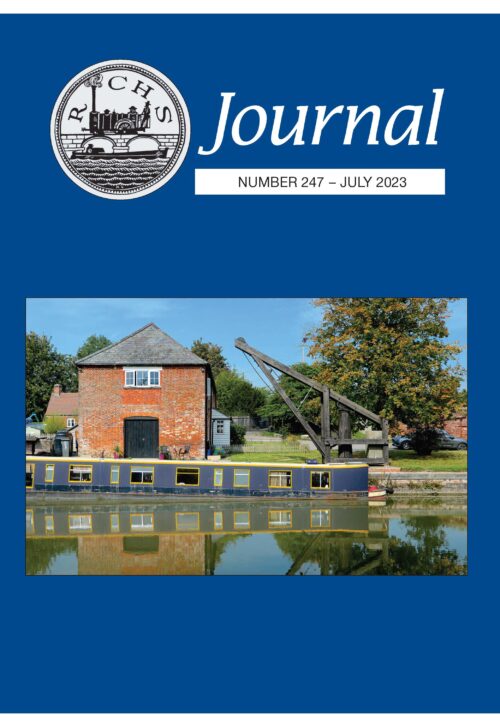 Contents: The ‘Fourth Arm’ : transporting ammunition for Bomber Command in World War Two — Gary Bonsall The administration of rural roads in Victorian times. Part 3 : The dissolution of the Drayton Highway District — Peter Brown The ferries of the Cleddau and Milford Haven Part 1 : Haverfordwest to Pembroke ferry — Martin Connop Price Joseph Townsend’s ‘On the utility, structure, and management of canals’ — Richard VandeWetering George Stephenson’s ‘South Western Railway’ — R F Hartley Some thoughts and observations about skew arches — John Poulter Obituary (Robin Welton) Correspondence Reviews
-
 Contents: The introduction of Area Management: a personal memoir — Grahame Boyes The ferries of the Cleddau and Milford Haven: Part 2 : The ferries of Milford Haven — Martin Connop Price The cost of land for raiiways — Michael Bishop Who coined the phrase ‘Beeching axe’ and when? — Tim Edmonds Some thoughts on the architecture of Ireland’s early main lines: Part 3 : The Midland Great Western Railway, 1848–1851 — R F Hartley Private Acts and public outcomes — R J B Morris More on skew bridges — Mike Clarke Correspondence Reviews
-
 Contents: (Not so) open access — John Nelson (Clinker Memorial Lecture) A financial review of a strategic joint railway: the Tottenham & Forest Gate Railway, 1890–1912 — Tony Sheward William Hill, William Jacob and the salt trade by canal through Gloucestershire, 1795–1808 — Diana Crane Some thoughts on the architecture of Ireland’s early main lines Part 4 : Dublin to Belfast — R F Hartley The twentieth century was the age of railway magazines — L A Summers George Stephenson & Son – a request for further information — R F Hartley Correspondence Reviews
-
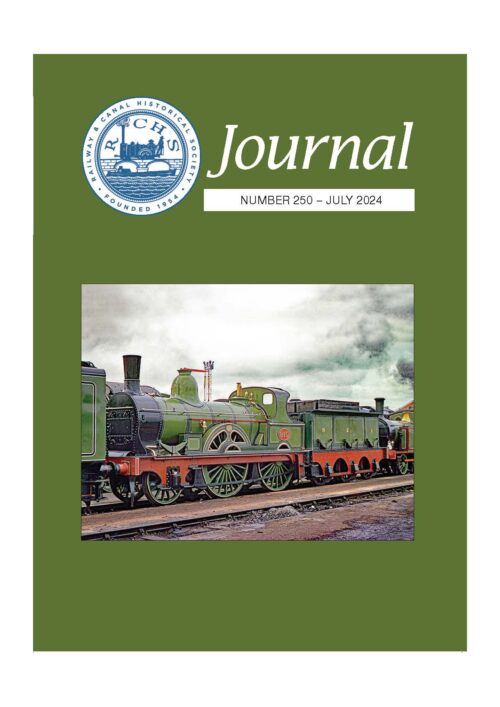 Contents: Mrs Tackle and the Bathampton branch — Anne Willis Passengers by long-distance fly boat in the early nineteenth century — Giles Eyre Death on the narrow gauge: an update — Peter Johnson The failure of post-World War One reconstruction and the Railways Act 1921 — Gary Bonsall The Portreath Tram Road — Michael Messenger First and acknowledged first: reinterpreting colonial era texts on the Indian railway project, 1836–1856 — Tilak Bhardwaj Correspondence Reviews
-
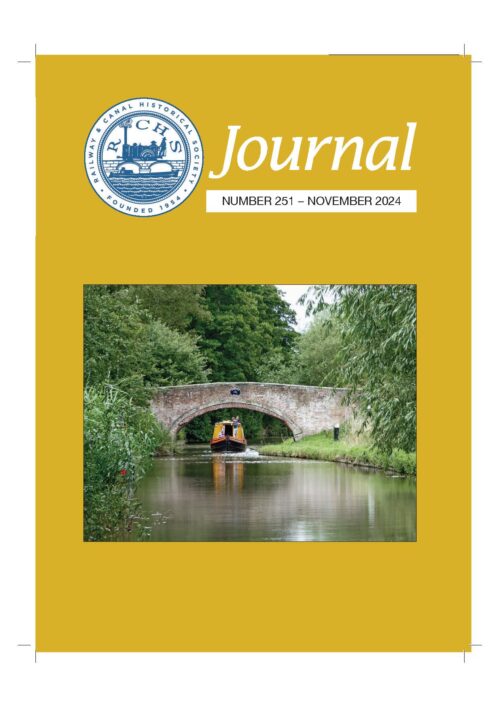 Contents: The Stafford Branch Canal and the Salt Works Arm at Baswich — David Jones Broadside ballads and the railways — Julia Winterson Shropshire’s earliest railways reconsidered — Dorian Gerhold The Trent Valley Railway – cutting the first sod (reprint) The Abermule rail disaster victims — Peter Johnson Some thoughts on the architecture of Ireland’s early main lines Part 5 : The Dublin & Kingstown Railway — R F Hartley Obituary (Gordon Biddle) Correspondence Reviews